Chapter 2 · The Architects
Johnny Cash
The Man in Black · Sun Records · Outlaw Era
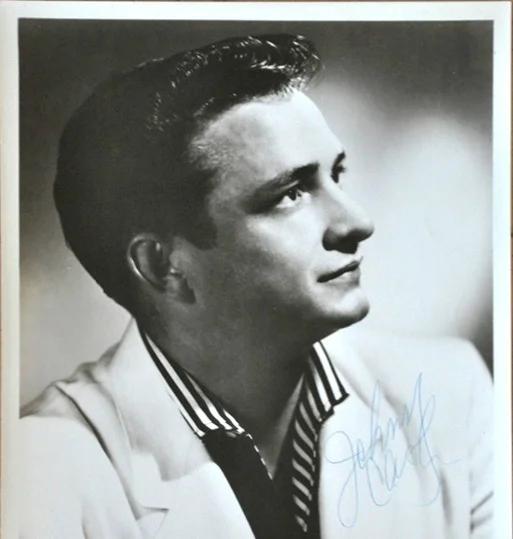
Rock & Roll Hall of Fame, 19921955 Sun Records publicity portrait — public domain (US)
The Story
Johnny Cash cut his teeth at Sun Records alongside Elvis, Jerry Lee Lewis, and Carl Perkins — the birth of rockabilly. His stripped-down 'boom-chicka-boom' rhythm with the Tennessee Three and plainspoken, gospel-and-folk-rooted songwriting proved rock and roll didn't need volume to hit hard.
He's one of only a handful of artists enshrined in the Rock, Country, and Gospel halls of fame — proof that great music never stayed in one lane, and neither do we.
Sound & Gear Breakdown
- "Boom-chicka-boom" Tennessee Three freight-train rhythm
- Restrained, plainspoken baritone vocal delivery
- Outlaw-era narrative songwriting rooted in gospel and folk tradition
Essential Listens
Folsom Prison Blues (1955)
Recorded live at Folsom State Prison in 1968, it became the defining outlaw-country anthem.
Hurt (2002)
His Rick Rubin-produced cover, recorded near the end of his life, proved rock and roll's rawest emotion never expires.
Legacy Impact
His stripped-down honesty is the direct ancestor of the singer-songwriter and outlaw-country movements that followed.
Lineage to Today
Cash proved a rock and roll pioneer's stage can be a prison yard as easily as an arena — the same conviction we look for in every act we book, big room or small bar.